0

New workshop for Analytics teams now live!

Logo de l'en-tĂȘte
NewsletterBlog Contact
Ateliers
Principes de conception pour l'analyse
Se connecter
← Back to all posts

The Hidden Cost of Audience Sprawl

Jan 20, 2026
Connect

In BI-Analytics, audience sprawl is still seen as a success.

More users.
More teams.
More personas.
More workshops.

In reality, it’s often the opposite.

When dashboards are built "for everyone" they slowly stop being useful for anyone.


The intention is usually good.
One dashboard to align everyone.
One view to avoid silos.

But what actually happens:

  • Too many personas with incompatible needs

  • Workshops with too many voices

  • No clear consensus

  • Frustration on all sides

And eventually, a dashboard that tries to say everything and says nothing clearly.

Where things break

There are cases where broad dashboards make sense:

  • cross-team views

  • shared KPIs

  • global monitoring

But audience sprawl changes the rules.

As the audience grows:

  • scope expands

  • volumetry explodes

  • performance drops

  • time-to-market increases

And the original intent gets diluted.

What was meant to clarify becomes harder to maintain, harder to evolve and harder to trust.

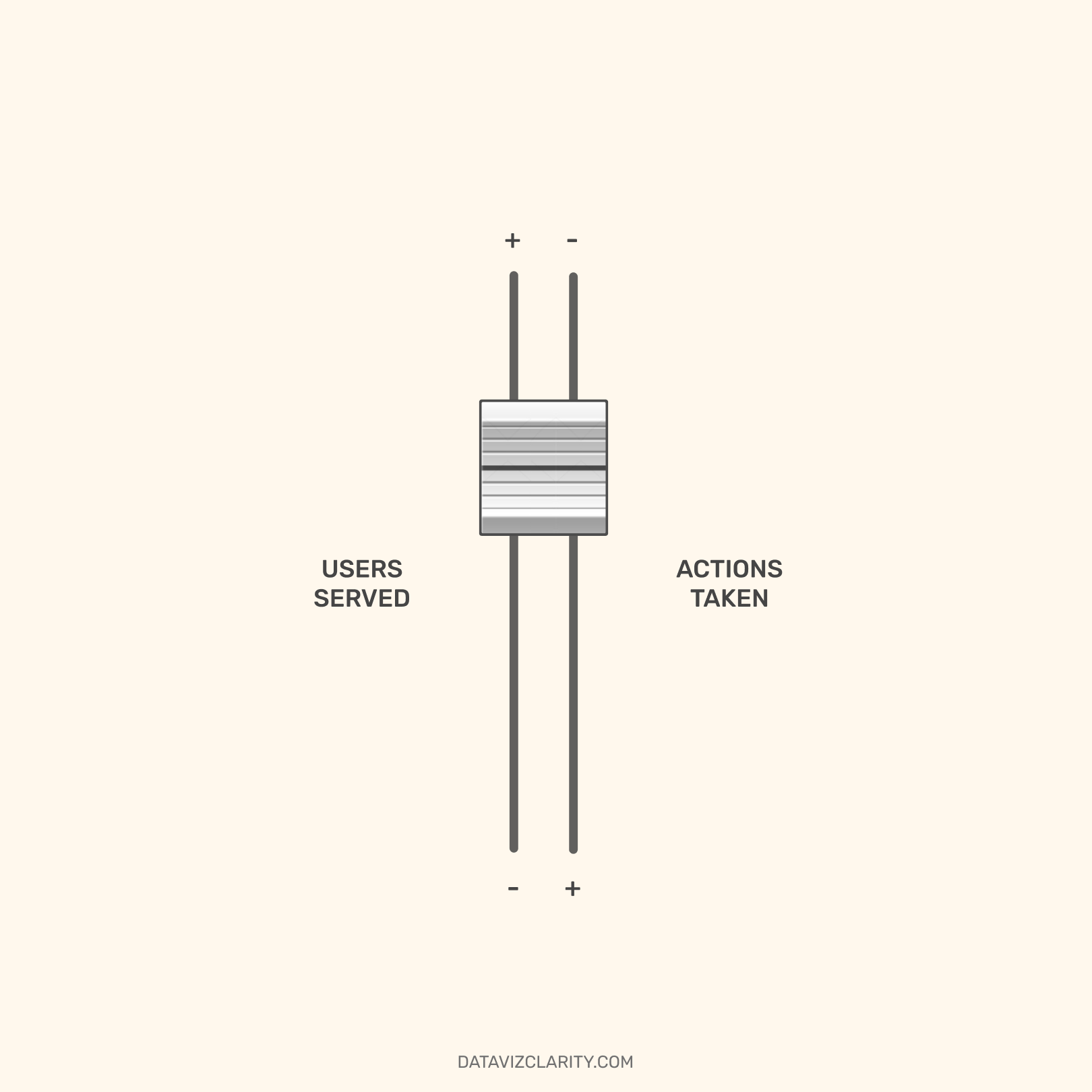
Value isn’t multiplied by access.
The uncomfortable truth

Audience sprawl is often a cultural reflex.
A legacy of "we must serve everyone."

But BI doesn’t scale by addition.
It scales by intention.

Not every audience deserves a dashboard.
Not every dashboard should serve every audience.

Serving more people does not mean creating more value.

How many dashboards are you still dealing with simply because their audience is too broad? 

Most common answers I hear:

  • The one we’re scared to redesign.

  • The executive dashboard, used by everyone except the executives.

  • The one that was easier than saying no.

  • The global KPI dashboard.

If you’re smiling, it’s probably all four.

Responses

Join the conversation
t("newsletters.loading")
Loading...
Data-to-Decision Leakage
*]:pointer-events-auto scroll-mt-(--header-height)" dir="auto" tabindex="-1"> *]:pointer-events-auto scroll-mt-[calc(var(--header-height)+min(200px,max(70px,20svh)))]" dir="auto" tabindex="-1"> Most data teams track what they produce. Number of dashboards.Number of reports.Number of requests delivered. It looks like performance. It’s not. I think most organizations have no idea how much v...
I think most companies don’t really have an Analytics Operating Model. Do you?
*]:pointer-events-auto scroll-mt-(--header-height)" dir="auto" tabindex="-1"> *]:pointer-events-auto scroll-mt-[calc(var(--header-height)+min(200px,max(70px,20svh)))]" dir="auto" tabindex="-1"> Most data team efforts never translate into actual business decisions. Not because they don’t invest.Not because they lack tools or skills. From what I see, it’s more about how everything is struct...
The 48 recurring mistakes in the Data Design Process
*]:pointer-events-auto scroll-mt-(--header-height)" dir="auto" tabindex="-1"> *]:pointer-events-auto scroll-mt-[calc(var(--header-height)+min(200px,max(70px,20svh)))]" dir="auto" tabindex="-1"> Late issue
 but still more timely than most dashboards. For 12 years, I’ve worked with data teams across all kinds of companies. Different industries. Different stacks. Same problem.A lack of metho...

Le dossier de conception du tableau de bord

What you’ll get every Tuesday A series of sharp visuals that decode common mistakes in analytics and dashboard design. Fast to read. Easy to apply. Hard to forget.
Logo en bas de page
Politique de confidentialité Conditions d'utilisation
© 2026 Dataviz Clarity
Propulsé par Kajabi