Your data team is losing authority.
Always delivering. Trusted less and less.
A quick assessment of how your analytics actually supports decisions.
The situation
You probably feel it already.
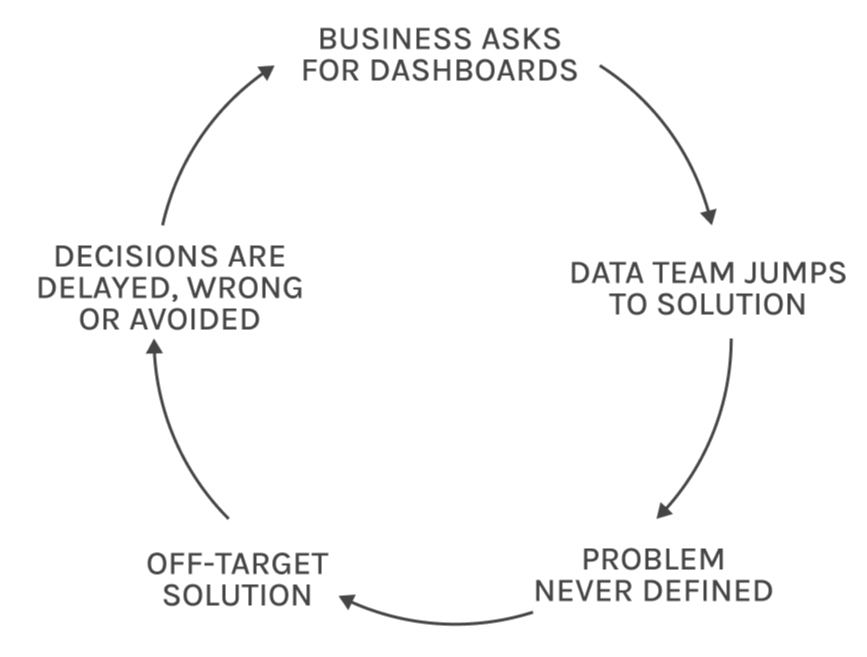
You can’t say no anymore. Priorities keep shifting. Everything feels urgent.
Dashboards keep piling up. No one really knows which ones matter.
Some get used. Most don’t. No one says it clearly.
The business starts bypassing your team. Exporting to Excel, shadow IT, side files...
You’re still responsible. But less and less in control.
What you tried
You tried to fix it. You trained your teams. You changed tools. You set up onboarding.
Maybe you introduced self-service to reduce the bottleneck.
It helped at first.
Then things slipped back. Sometimes worse.
More requests. More confusion. More frustration.
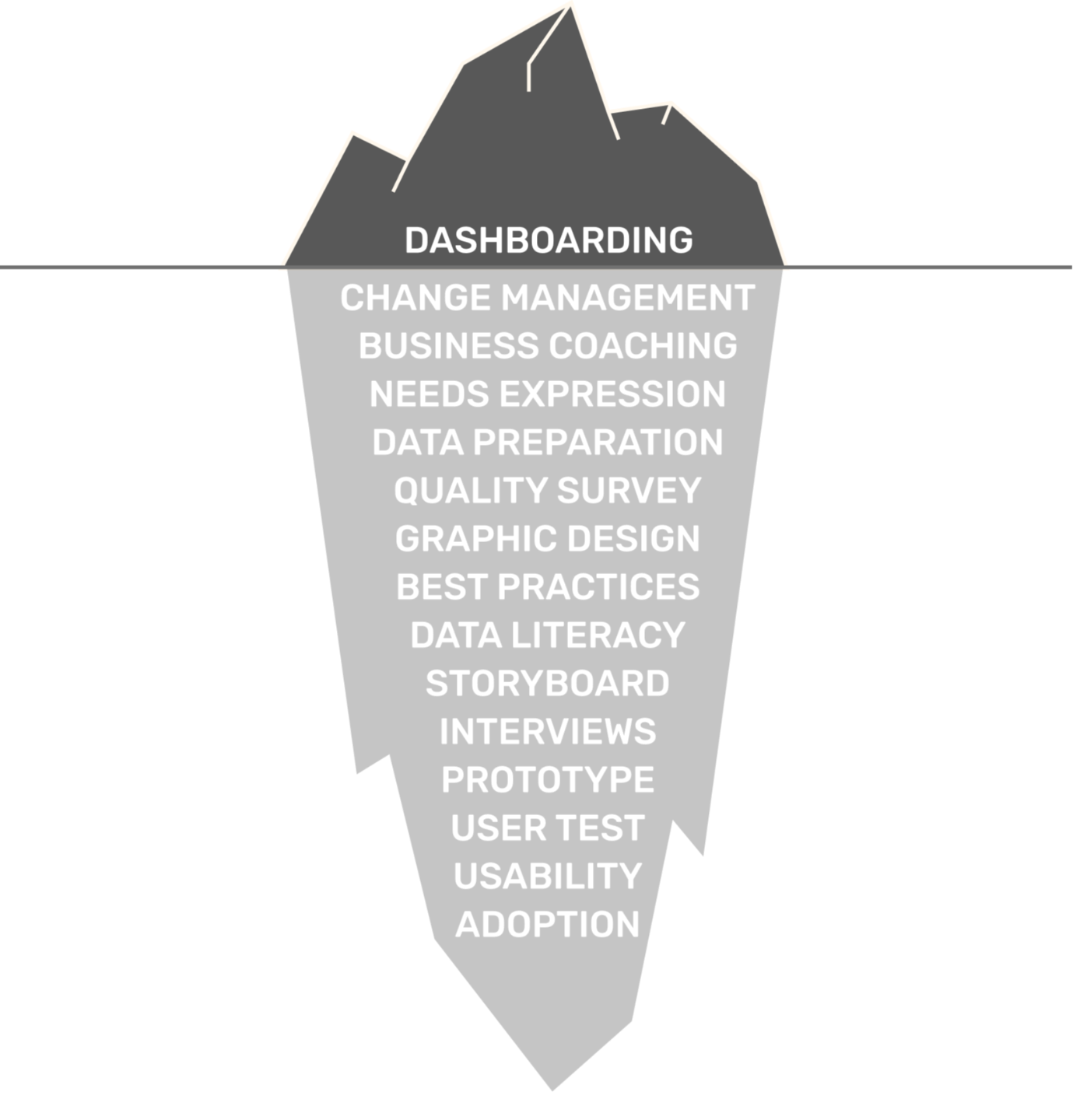
Now your Data Analysts are not just building.
They are coaching. Supporting. Explaining. Fixing. Managing change across teams.
The workload didn’t disappear. It expanded.
What's really breaking
The issue is not technical skills.
It’s how your system runs.
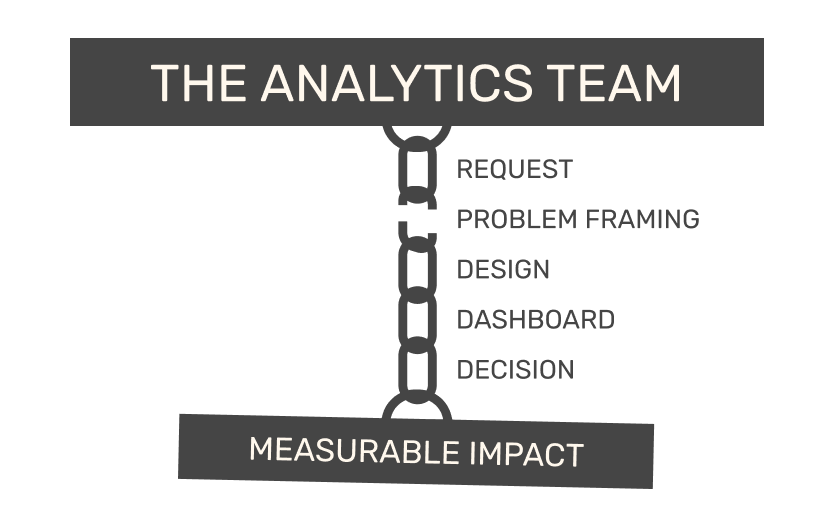
- How requests enter.
- How problems are defined.
- How users are actually listened to.
- How solutions are designed.
- How dashboards fit into decisions.
- How decisions are made and by whom.
If these steps are weak, everything downstream becomes fragile.
Better charts won’t fix it. Faster tools won’t fix it.
The 3 common illusions of acceleration
1. Delivery
You keep delivering.
Requests keep coming, rarely challenged.
Some don’t make sense. Some are unclear or just wrong.
Then it needs to be redesigned.
"It’s not exactly what we needed."
So you keep going. Again.
You maintain what was built years ago, by people who left, with logic no one understands.
It becomes a nightmare.
And you still have to keep building.
2. Self-Service Analytics
You open access to scale.
More people build. More autonomy.
But instead of reducing the load, your team now has to coach and support.
What was meant to accelerate delivery becomes a burden.
You now have to fix what was built too fast.
Without structure. Without enough support.
What looked like a solution was just a patch.
And it came too early.
3. Artificial Intelligence
You add AI on top of the system now.
But the system is already broken.
Definitions are unclear.
Data is inconsistent.
Requests are not structured.
So instead of fixing it, you scale the confusion.
Faster answers.
But to the wrong questions.
What used to be slow and messy
becomes fast and messy.
And what looks like progress
makes the system harder to fix.
What it leads to
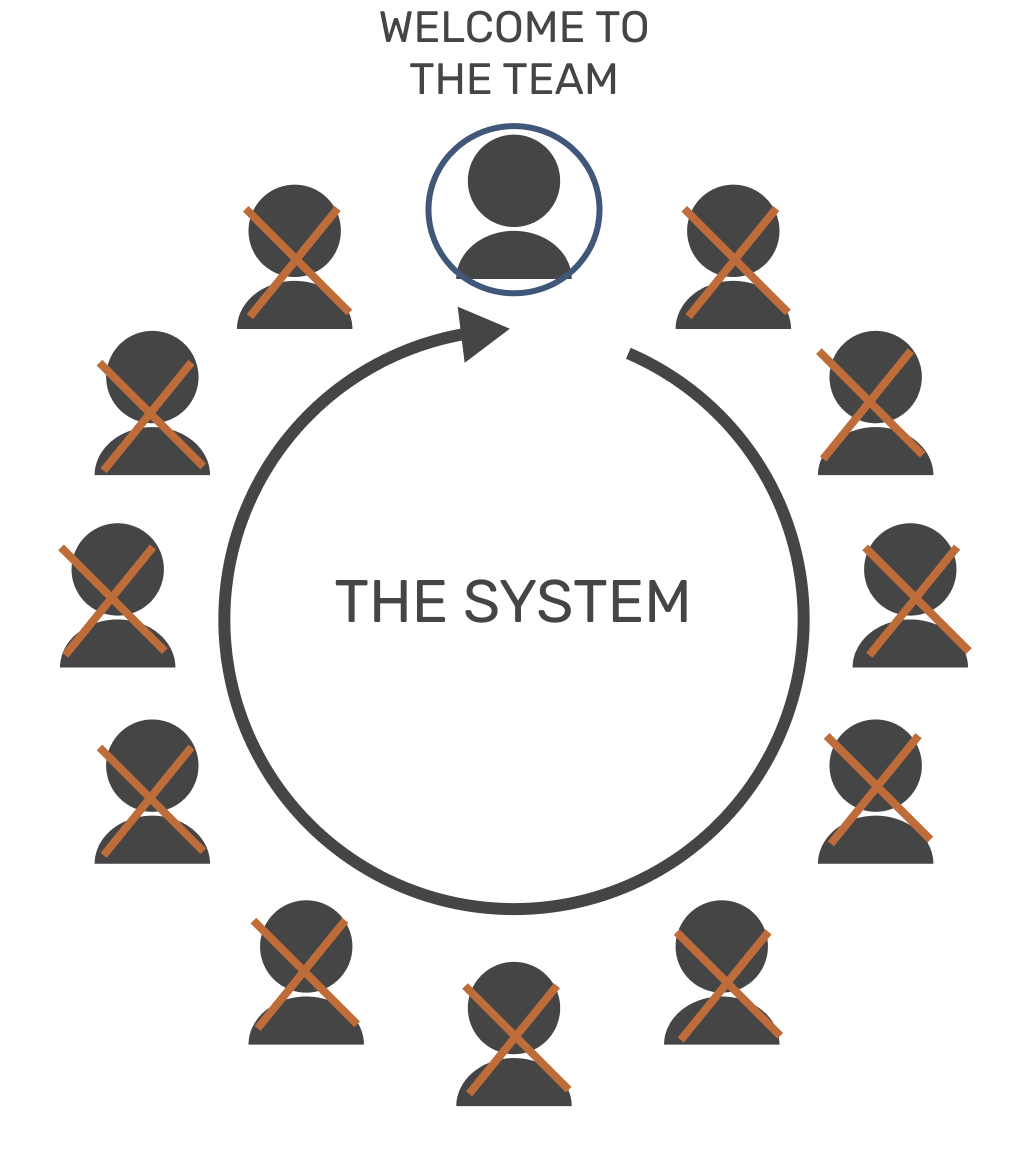
The workload doesn’t go down, it spreads. Your team stays overloaded and accountable, but with less authority, less clarity, and less impact.
Slowly, something shifts. Legitimacy fades. Decisions are questioned, outputs challenged, trust erodes.
Your analysts get pulled in every direction, fixing, explaining, catching up, until they burn out and leave or switch teams.
You lose the people you invested in.
And the system stays broken.
Let's be honest
If you think this won’t change in your company, you’re probably right.
Not because it’s too complex, but because no one sees clearly where to act.
What’s missing is clarity, not effort, not tools.
The real problem is a system that keeps producing noise, requests, and low-impact outputs.
And until you see where it breaks, you’ll keep fixing symptoms.
That’s where this diagnostic comes in.
What to do next
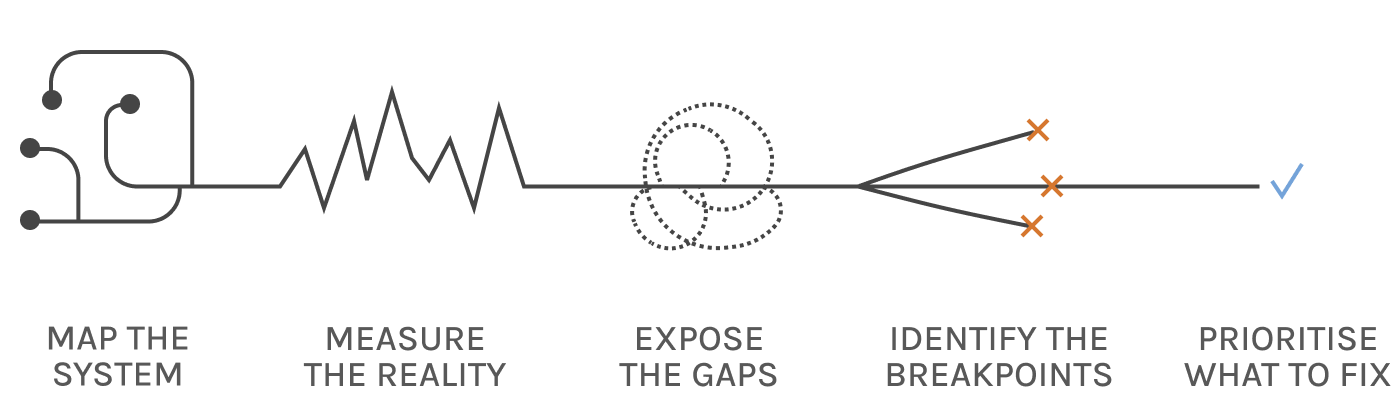
This diagnostic helps you map where your analytics actually breaks.
Where requests lose clarity.
Where your team loses control.
Where dashboards lose impact.
In 45 minutes, you get a clear view of:
- what’s not working
- where authority is lost
- what to fix first
Then we assess advanced diagnostic relevance.
The advanced diagnostic
The goal of the diagnostic is simple: make sure you’re not fixing symptoms.
Qui suis-je ?
My name is Aurélien Vautier, I’ve worked closely with data teams for years.
And I kept seeing the same pattern.
Dashboards delivered.
But rarely used.
Rarely trusted.
Rarely tied to decisions.
2,000+ professionals trained.
Thousands of dashboards reviewed.
The issue was never the effort.
It was how analytics was run.
That’s the gap this diagnostic helps you see.
This is for you if
- your backlog grows faster than you can deliver
- you don’t know what actually drives decisions
- outputs are produced, but usage and impact remain unclear
- business teams bypass your team to get things done
- definitions, KPIs, and ways of working are not aligned
This is not for you if:
- you’re looking for a quick fix or a new dashboard
- you believe tools or self-service will solve the issue on their own
- you don’t see this as a system-level problem
- you don’t have the room to rethink how decisions are supported
- you expect solutions without taking the time to understand the problem